The Calcium Curse: Why Your East Valley Pool Filter Needs a Spring Clean Now
![[HERO] The Calcium Curse: Why Your East Valley Pool Filter Needs a Spring Clean Now](https://cdn.marblism.com/JS5YG5KQm84.webp)
Hey there, East Valley pool owners. It’s Jeff Niegsch here from Complete Aquatic Solutions. It’s Tuesday, March 3rd, 2026, and if you step outside today, you can feel it: that specific Arizona spring air. The citrus trees are blooming in Mesa, the kids are starting to ask when the heater is getting turned on in Gilbert, and the "Calcium Curse" is silently tightening its grip on your pool equipment.
If you’ve lived in Chandler, Queen Creek, or San Tan Valley for more than a season, you know our water isn't just water. It’s practically liquid rock. As we head into the 2026 swim season, your pool filter is the only thing standing between you and a swampy, green mess.
Today, I want to talk about why a spring filter clean isn't just a "good idea": it’s a survival tactic for your backyard oasis.
Arizona "Liquid Rock": The Hard Truth About Our Water
In the East Valley, we have some of the hardest water in the United States. When we talk about "hard water," we’re talking about calcium carbonate and magnesium. In places like Mesa and Gilbert, our tap water often tests at 250 parts per million (ppm) of calcium right out of the faucet. By the time that water sits in your pool and evaporates under the desert sun, that number can skyrocket to 800 or even 1,000+ ppm.
This is what I call the "Calcium Curse." As the water evaporates, the minerals stay behind. They don't just sit there; they find surfaces to cling to. Your pool filter is a magnet for this stuff.
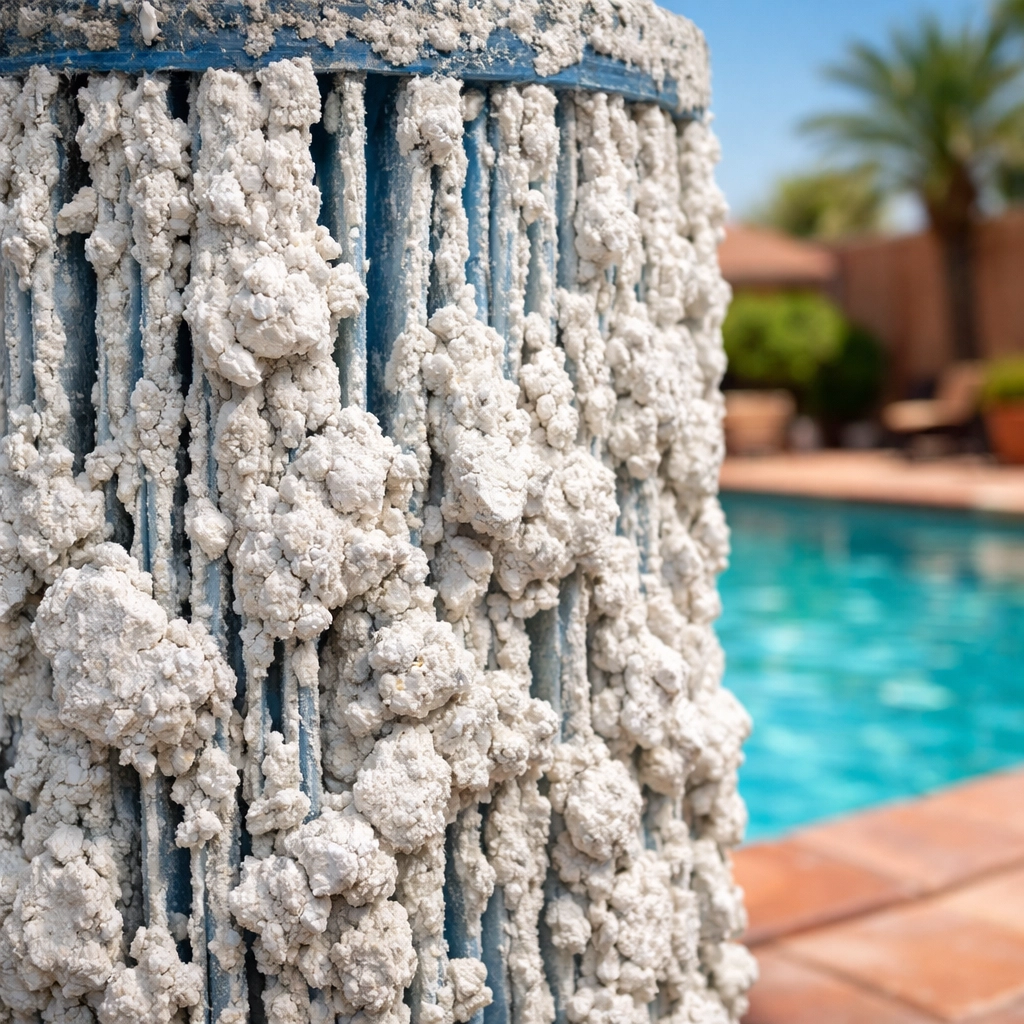
Over the winter, your pool might have looked fine because the water was cold. But as the temperature rises, those calcium deposits inside your filter elements: whether they are cartridges or DE grids: begin to calcify and harden. This creates a "crust" that restricts water flow. If your filter is choked out by calcium, your pump has to work twice as hard, your electricity bill spikes, and your water stops moving.
The Algae Connection: Why a Dirty Filter Leads to the "Green Monster"
I see it every year. A homeowner in Chandler calls me up in late March saying, "Jeff, my chemicals are perfect, but the pool is turning cloudy."
Ninety percent of the time, the problem isn't the chemistry: it’s the circulation. You can throw all the chlorine in the world at a pool, but if the water isn't moving through the filter effectively, you’re going to get "dead spots." Dead spots are areas where the water stays still, the chlorine gets used up, and algae starts to bloom.
A dirty, calcium-clogged filter is the primary cause of poor circulation. Think of it like trying to breathe through a wet wool blanket. You might be getting some air, but you’re struggling. Your filter needs to be clear of that winter gunk and calcium buildup to ensure that every drop of water in your pool is sanitized and polished before the heat hits triple digits.
Know Your Filter: Quick Tips for Spring Maintenance
Depending on what you have sitting on your equipment pad in San Tan Valley or Queen Creek, your "Spring Clean" will look a little different.
1. Cartridge Filters
Most modern pools in the East Valley use cartridge filters. These are great, but they are calcium sponges. The Pro Tip: Don't just spray them with a hose. You need to soak them in a filter cleaner to break down the oils and then, if the calcium is heavy, a mild acid solution to dissolve the minerals. If your cartridges are more than 3 years old and the pleats are starting to "fuzzy," it’s time to head over to our parts page and look for replacements.2. D.E. (Diatomaceous Earth) Filters
DE filters provide the clearest water, but they are high maintenance. The Pro Tip: This is the time of year for a full "breakdown." Don't just backwash. You need to take the tank apart, hose off the grids, and inspect them for tears. Recharging with fresh DE is vital. If you see DE powder returning into the pool, you’ve got a broken grid or a bad manifold.3. Sand Filters
While less common in newer builds, sand filters are workhorses. The Pro Tip: Sand doesn't "wear out," but it does get "channeled." This is when the water carves a path through the sand and stops being filtered. A deep-clean or a sand replacement every 3–5 years is key for East Valley pools.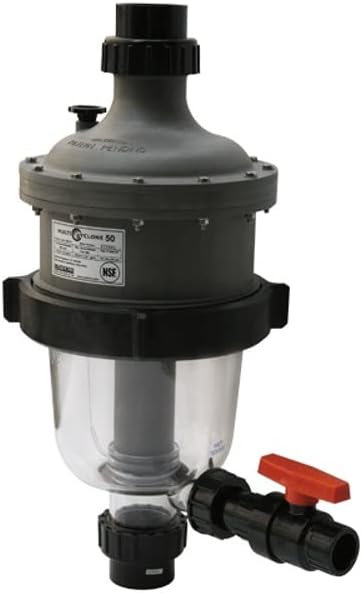
Testing the Hardness: Don't Guess, Use the Taylor K-2006
If you’re a DIYer, you need the right tools. I don't trust test strips for calcium hardness: they just aren't accurate enough for our "liquid rock" water.
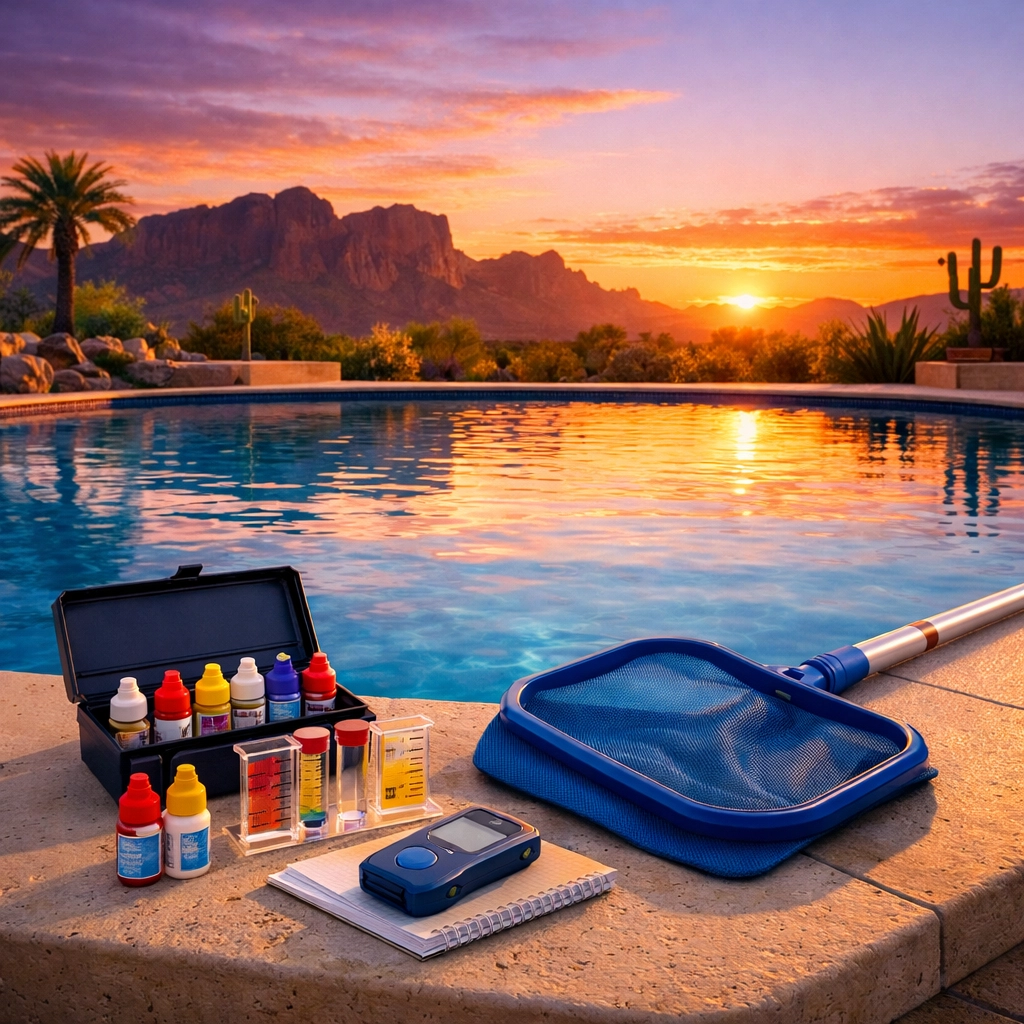
I always recommend the Taylor K-2006 Service Kit. It uses a titration method that is the industry gold standard. When you test your water this week, look at your Calcium Hardness (CH). If it’s over 800 ppm, no amount of filter cleaning will save you forever; you might be looking at a drain and refill or a professional acid wash to reset the clock.
If you’re unsure how to run these tests, check out our DIY guides or our training books for a step-by-step walkthrough.
Keeping the Gunk Out: The Role of the Pentair Rebel
One of the best ways to prevent your filter from getting overloaded in the first place is to have a solid primary cleaner. Leaves, dust, and heavy debris shouldn't all end up in your filter canister.
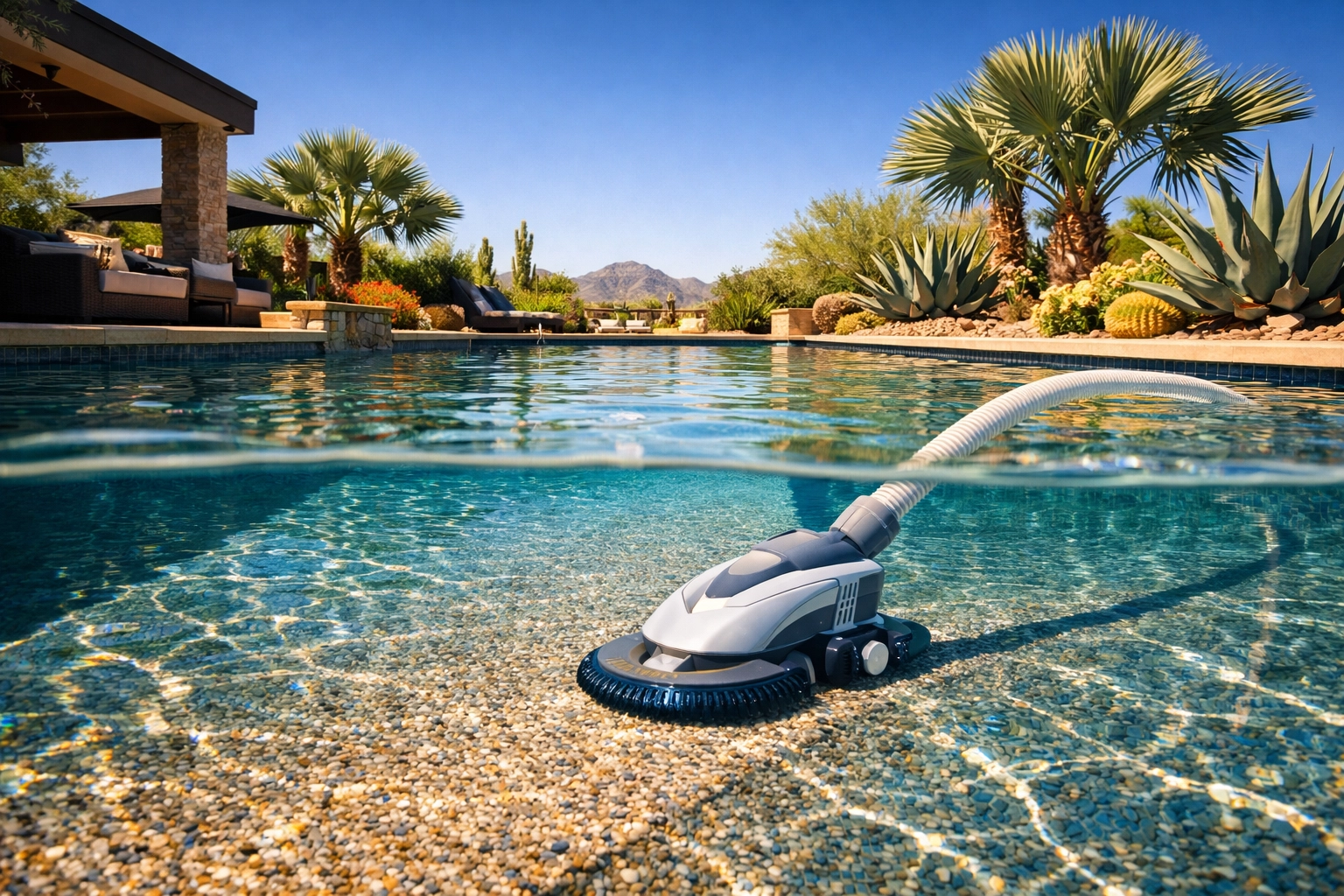
We’re big fans of the Pentair Rebel Suction Side Cleaner. In the windy spring months of Queen Creek and San Tan Valley, the Rebel is a beast at picking up the sand and grit that blows in from the desert. By capturing that debris in the pump basket or a leaf canister before it reaches the filter, you extend the life of your filter media and keep that "Calcium Curse" from binding to organic material inside the tank.
If you want to know more about how these cleaners stack up, read my previous post on the truth about pool cleaning robots.
When to DIY and When to Call the Pros
I love a good DIY project. We even have a whole section of manuals and videos to help you out. But sometimes, pool equipment can be intimidating. High-pressure filter tanks can be dangerous if the clamp isn't seated correctly, and handling muriatic acid for a filter soak isn't everyone's idea of a fun Saturday.
If your pressure gauge is reading 8-10 PSI over its "clean" starting pressure, or if you're seeing "short cycling" (where the pressure goes back up just days after you cleaned it), you’ve got a deep-seated calcium issue.
At Complete Aquatic Solutions, we specialize in making sure your equipment is ready for the Arizona summer. Whether you are in Mesa, Gilbert, Chandler, or Queen Creek, we’re here to help.
We offer: Professional Filter Cleanings: We take it apart, acid-soak the elements, and inspect every O-ring. Acid Washes: To remove that stubborn scale from your plaster. Weekly Service: So you never have to worry about the "Green Monster" again.
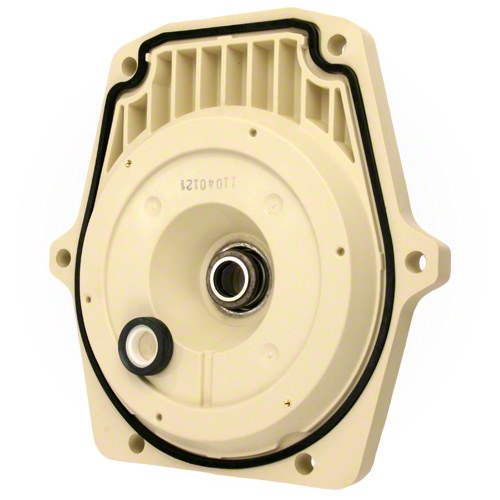
- Equipment Repair: From leaky pump seal plates to full motor replacements.
Final Thoughts for March
Spring in the East Valley is beautiful, but it's the most critical time for pool maintenance. Don't let the Calcium Curse ruin your first swim of the year. Grab your Taylor K-2006, check those levels, and give your filter the love it deserves.
If you run into trouble or just want the peace of mind that comes with a professional touch, give us a shout. You can explore our FAQ for quick answers or contact us directly through our homepage.
Keep it clear, keep it cool, and let’s get ready for a great 2026 season!
: Jeff Niegsch Founder, Complete Aquatic Solutions