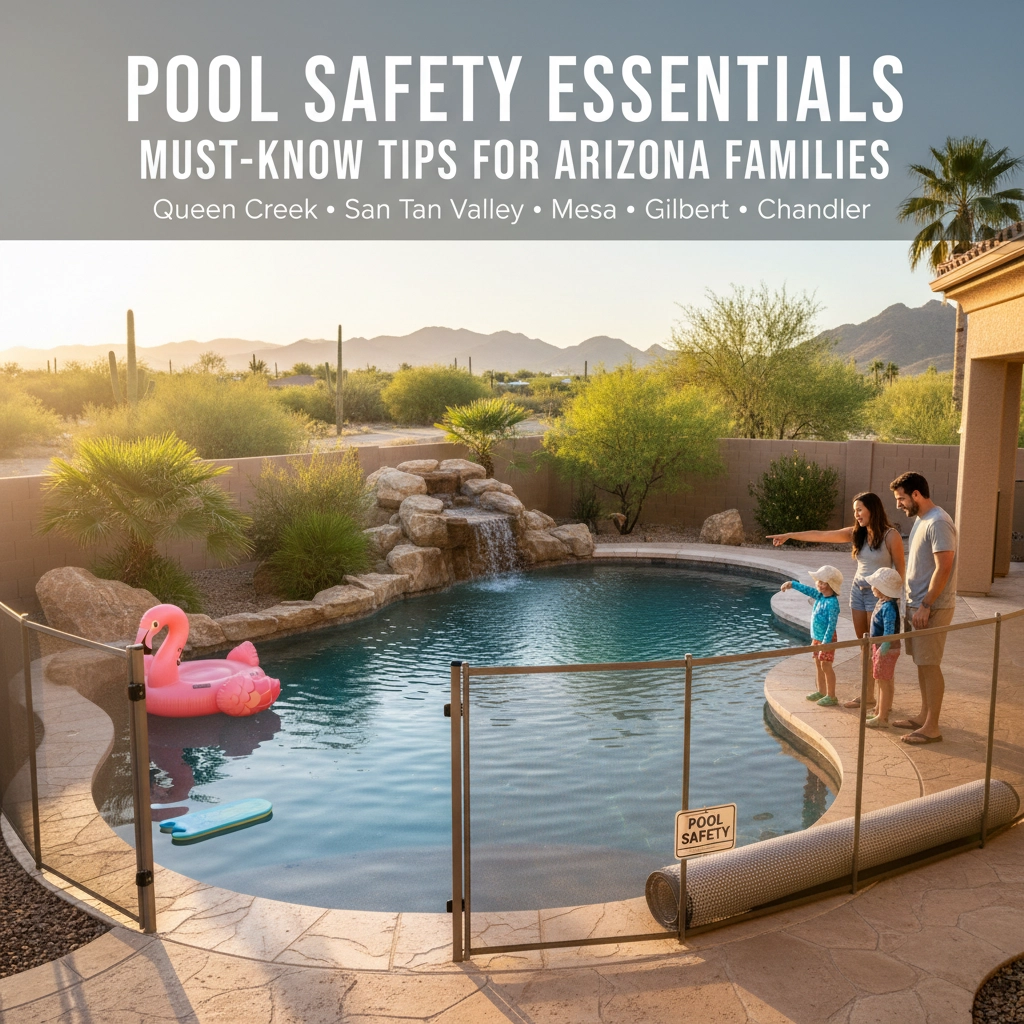
Quick Pool Safety Tips for Arizona Homeowners (2025 Edition)
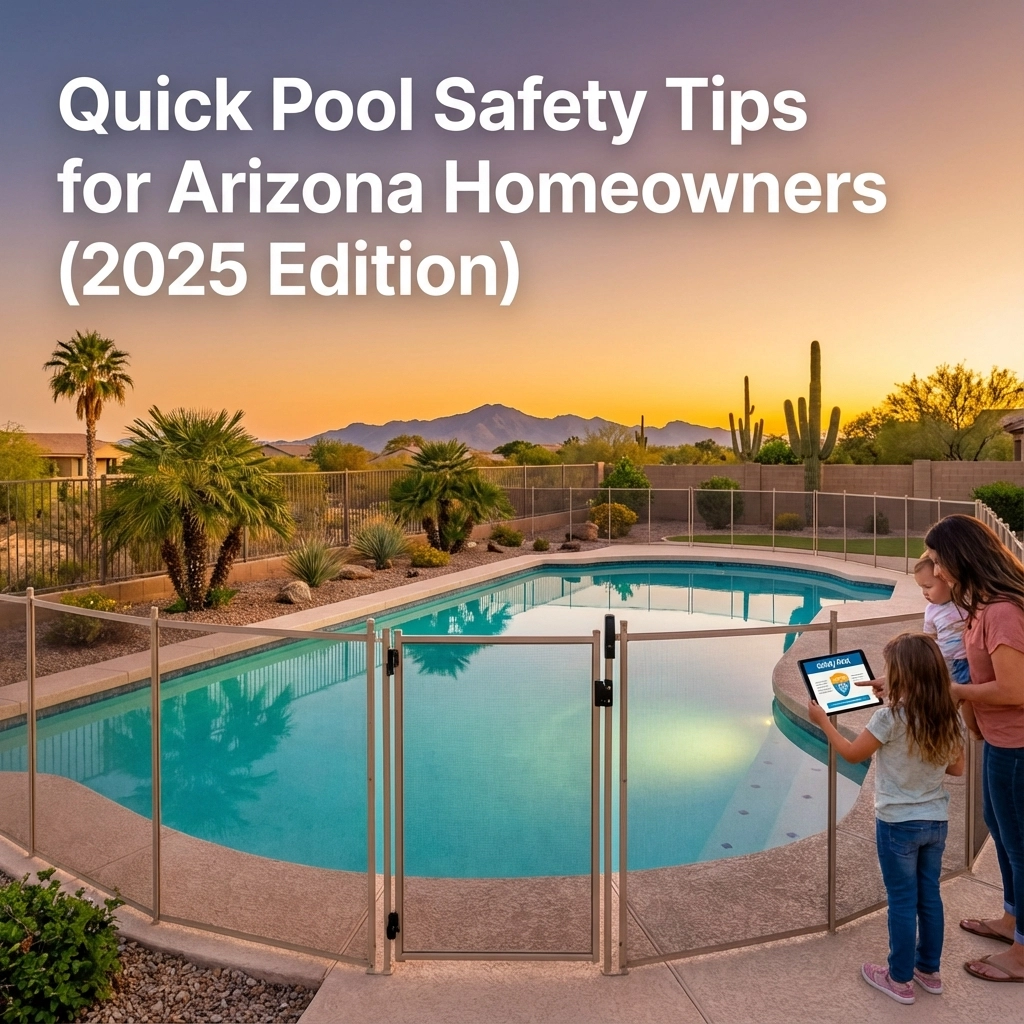
Pool ownership in Arizona comes with serious safety responsibilities. With over 600,000 residential pools across the Valley, from Queen Creek to Chandler, understanding and implementing proper safety measures isn't just about compliance: it's about protecting lives. Here's your comprehensive guide to pool safety that every Arizona homeowner needs to know.
Understanding Arizona's Pool Fence Laws
Arizona takes pool safety seriously, and the state's barrier requirements are among the most specific in the nation. Your pool fence must be at least 5 feet tall, measured from ground level outside the fence. This isn't just a suggestion: it's the law, and for good reason.
The 5-foot minimum exists because studies show this height effectively prevents most children from climbing over, even when using nearby objects for leverage. In areas like Gilbert and Mesa, where many homes have decorative landscaping near pools, this height requirement becomes even more critical.
Your fence must have no gaps larger than a 4-inch sphere anywhere in the barrier. This includes the fence panels, gates, and the space between the bottom of the fence and the ground. Think of it this way: if a baseball can fit through, a small child might be able to squeeze through too.
Additionally, horizontal fence components must be spaced at least 45 inches apart vertically. If your fence has horizontal rails closer together than this, they essentially create a ladder that children can use to climb. Always install horizontal elements on the pool side (inside the barrier) so they can't be used as climbing aids from the outside.
Critical Gate and Door Safety Requirements
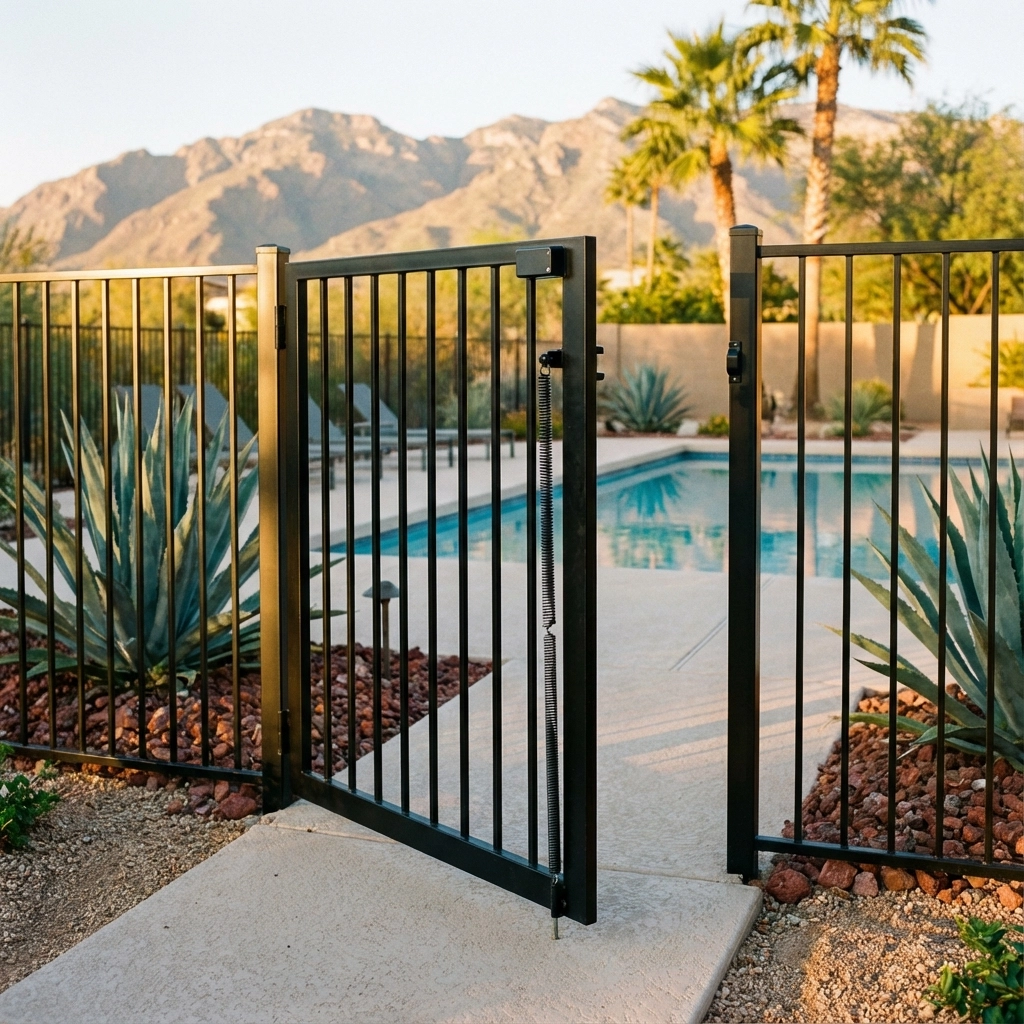
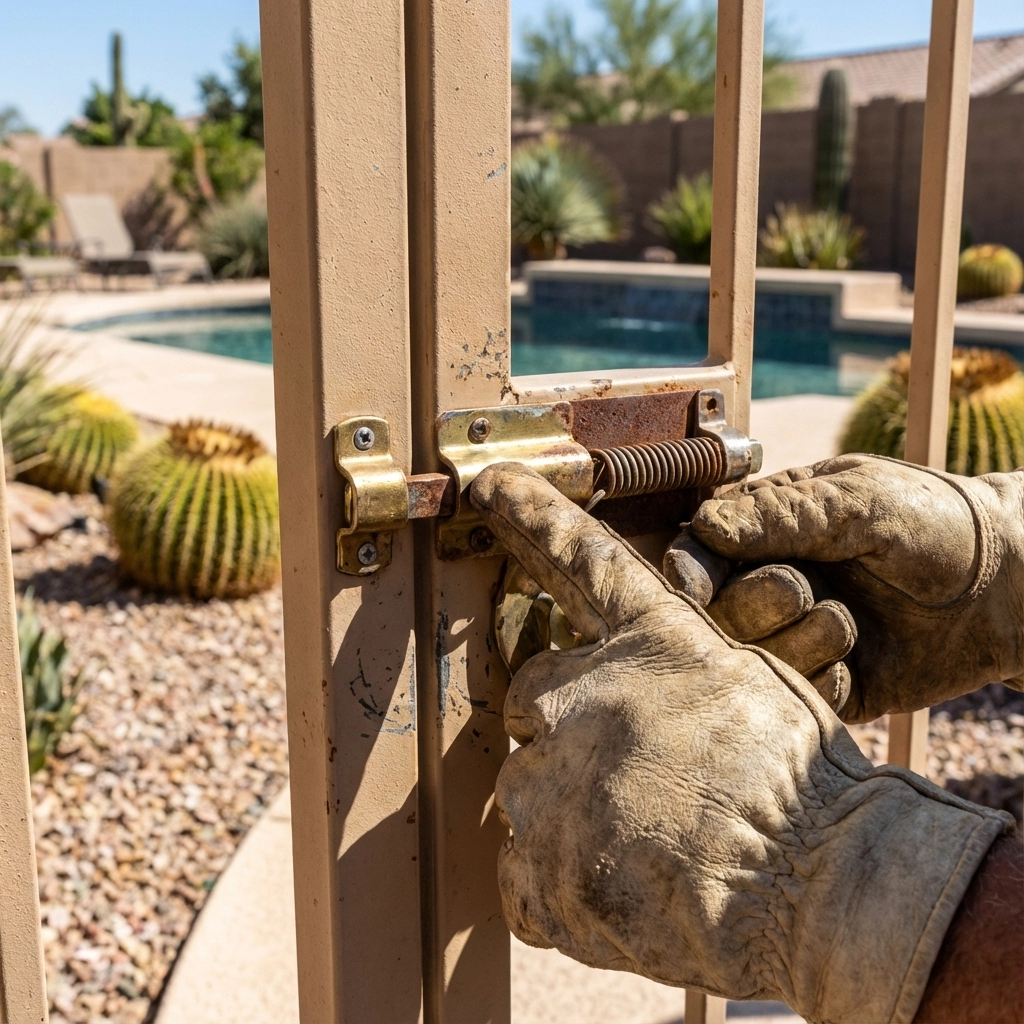
Gates are often the weakest link in pool safety systems. Your pool gates must be self-closing and self-latching, designed to swing away from the pool area. This means when someone opens the gate and lets go, it should automatically close and latch securely.
The latch mechanism is crucial and has specific placement requirements. Position latches at least 54 inches above ground level. If you choose to place the latch on the pool side of the gate, it must be at least 5 inches below the top of the gate. This placement ensures young children can't reach the latch while preventing them from climbing over to access it.
Ensure there are no openings larger than ½ inch within 24 inches of the latch mechanism. Even small gaps near latches can be exploited by determined children or become handholds for climbing.
House Door Safety Considerations
If your house forms part of your pool barrier: common in many Chandler and San Tan Valley homes: special door requirements apply. Any door providing direct access to the pool area must be self-closing and self-latching, swinging outward away from the pool.
Never install pet doors in pool-access doors, and avoid removable screen doors that compromise the barrier integrity. Some Arizona municipalities, particularly in areas like Tempe and parts of Phoenix, require audible alarms on pool-access doors. These alarms sound when the door is opened, alerting you to potential unsupervised pool access.
Check with your local building department, as requirements vary between cities. What's compliant in Queen Creek might not meet standards in Gilbert or Mesa.
Additional Safety Equipment and Measures
Beyond barriers, consider installing pool alarms that detect water disturbance. These devices can alert you if someone enters the pool unexpectedly. Modern pool alarm systems are sophisticated enough to distinguish between a child falling in and normal pool activity like debris blowing across the surface.
Pool covers add an extra layer of protection, but they must be designed to support the weight of a small child if they walk on them. Automatic safety covers that meet ASTM standards provide both safety and convenience, though they represent a significant investment.
Keep rescue equipment readily accessible. A reaching pole, life ring, or shepherd's hook should be stored near your pool. In Arizona's intense heat, someone may need assistance due to heat exhaustion even if they're a strong swimmer.
Proper Distance and Positioning
Your pool barrier should be installed at least 20 inches away from the water's edge. This creates a safety buffer zone and ensures that if someone does breach the barrier, they don't immediately fall into deep water.
This distance requirement also makes practical sense for maintenance. You need space to safely clean the pool perimeter and service equipment without constantly worrying about slipping into the water.
Consider sight lines when positioning safety equipment and barriers. You want clear visibility into the pool area from your home's main living spaces. If your kitchen window overlooks the pool area, you can maintain casual supervision while doing other activities.
Understanding Compliance and Enforcement
Arizona law provides a 45-day compliance period if you receive a citation for safety violations. This grace period allows homeowners to correct issues before facing escalating penalties. However, don't rely on this timeline: it's much better to ensure compliance from the beginning.
First-time violators who bring their property into compliance within the 45-day window and attend an approved pool safety course may avoid financial penalties entirely. Many local fire departments in the East Valley offer these courses, providing valuable education beyond just meeting legal requirements.
Regular Maintenance and Inspection
Safety equipment requires regular maintenance to remain effective. Test gate latches monthly to ensure they're functioning properly. Arizona's intense sun and temperature fluctuations can cause materials to warp or hardware to loosen over time.
Inspect fence integrity seasonally, paying particular attention to areas where landscaping or pool equipment might have created new gaps or climbing opportunities. Monsoon winds and flash flooding common in Arizona can shift fence posts or wash away soil, creating gaps under barriers.
Check pool deck surfaces regularly for slip hazards. Arizona's mineral-rich water can create calcium buildup on pool decking, making surfaces slippery when wet. Keep deck areas clean and consider applying anti-slip treatments in high-traffic areas.
Emergency Preparedness and Response
Every pool owner should know CPR and basic water rescue techniques. The American Red Cross offers classes throughout the Valley, with regular sessions in Queen Creek, Gilbert, Mesa, and Chandler. These skills can save lives in the critical minutes before emergency responders arrive.
Keep emergency contact numbers posted near your pool area. Include poison control (1-800-222-1222) since pool chemical accidents can occur. Ensure all family members and frequent guests know where emergency information is located.
Establish and communicate clear pool rules to all family members and guests. Children should never swim alone, and adults should designate a "water watcher" during pool parties or gatherings. This person's sole responsibility is supervising the pool: no distractions allowed.
Technology and Modern Safety Solutions
Modern pool safety has embraced technology in helpful ways. Smartphone-connected pool alarms can send alerts directly to your device if someone enters the pool unexpectedly. Some systems integrate with home security setups, providing comprehensive monitoring.
Consider installing security cameras with pool area coverage. While not a substitute for proper barriers and supervision, cameras provide additional monitoring capability and can help verify what happened in case of an incident.
Pool automation systems can contribute to safety by maintaining proper water chemistry automatically. Improperly balanced water can cause eye irritation that impairs swimming ability, and automated systems help prevent these issues.
Working with Local Authorities
Building departments in Queen Creek, Gilbert, Mesa, Chandler, and San Tan Valley may have specific requirements beyond state minimums. Before installing or modifying pool barriers, check with your local building official to ensure compliance with all applicable codes.
Some municipalities require permits for pool barrier installation or modifications. While this might seem like additional bureaucracy, the permitting process ensures professional inspection of your safety measures.
Many Arizona cities offer free pool safety inspections or educational programs. Take advantage of these resources: they're designed to help you protect your family and community.
The Bottom Line on Pool Safety
Pool safety isn't about following rules for the sake of compliance: it's about creating multiple layers of protection that prevent tragedies. Proper barriers, functioning safety equipment, emergency preparedness, and ongoing vigilance work together to make pool ownership safe and enjoyable.
Remember that safety requirements exist because they save lives. The few minutes and dollars invested in proper safety measures pale in comparison to the peace of mind they provide. Whether you're in Queen Creek, Mesa, Gilbert, Chandler, or San Tan Valley, these safety principles apply universally.
If you're unsure about your pool's safety compliance or need help implementing safety measures, don't hesitate to consult with pool safety professionals. Your family's safety is worth the investment in proper equipment and expert guidance.
Regular safety reviews should be part of your seasonal pool maintenance routine. As children grow and circumstances change, your safety needs may evolve too. Stay current with local requirements and best practices to ensure your pool remains a safe haven for family fun throughout Arizona's long swimming season.