Winter Pool Maintenance in Arizona: 5 Steps How to Keep Your Pool Perfect and Avoid Costly Repairs (Easy Guide for Desert Homeowners)
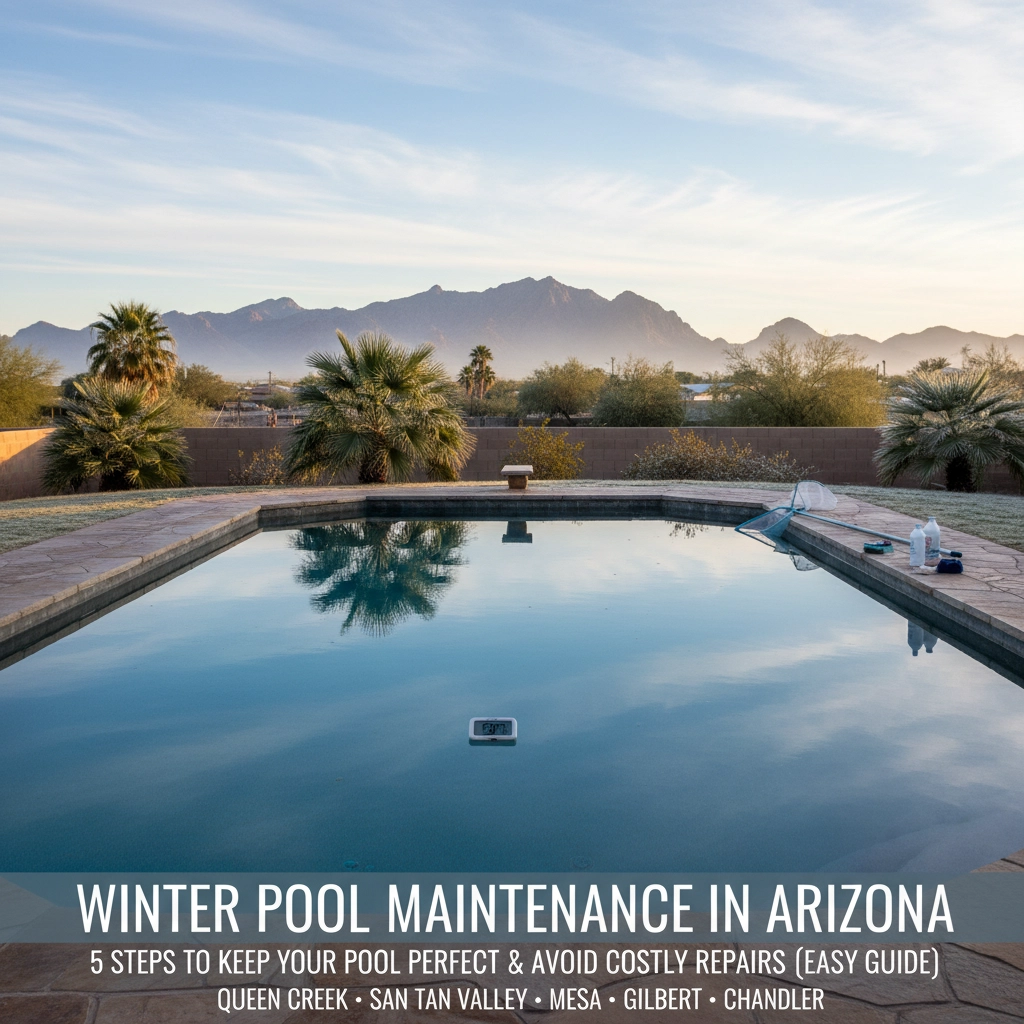
Living in Arizona's desert climate doesn't mean you can skip winter pool maintenance. While homeowners in Queen Creek, Mesa, Gilbert, Chandler, and San Tan Valley don't deal with frozen pipes or ice damage, our mild winters present unique challenges that can lead to costly repairs if ignored.
Many Arizona pool owners make the mistake of thinking winter maintenance is unnecessary. The truth? Proper off-season care prevents algae blooms, equipment failures, and expensive spring cleanup bills. Here's your complete 5-step guide to keeping your desert pool in perfect condition all winter long.
Step 1: Give Your Pool a Deep Clean Before Winter Sets In
Think of this step as preparing your pool for a long nap. Just like you wouldn't go to bed without brushing your teeth, your pool needs a thorough cleaning before entering its low-activity period.
Start by skimming every leaf, bug, and piece of debris from the surface. Arizona's windy fall and winter months can dump surprising amounts of desert dust and plant material into your pool. Next, brush the walls and floor thoroughly, this isn't just about visible dirt. You're breaking up microscopic algae and biofilm that love to hide in tile grout and textured surfaces.
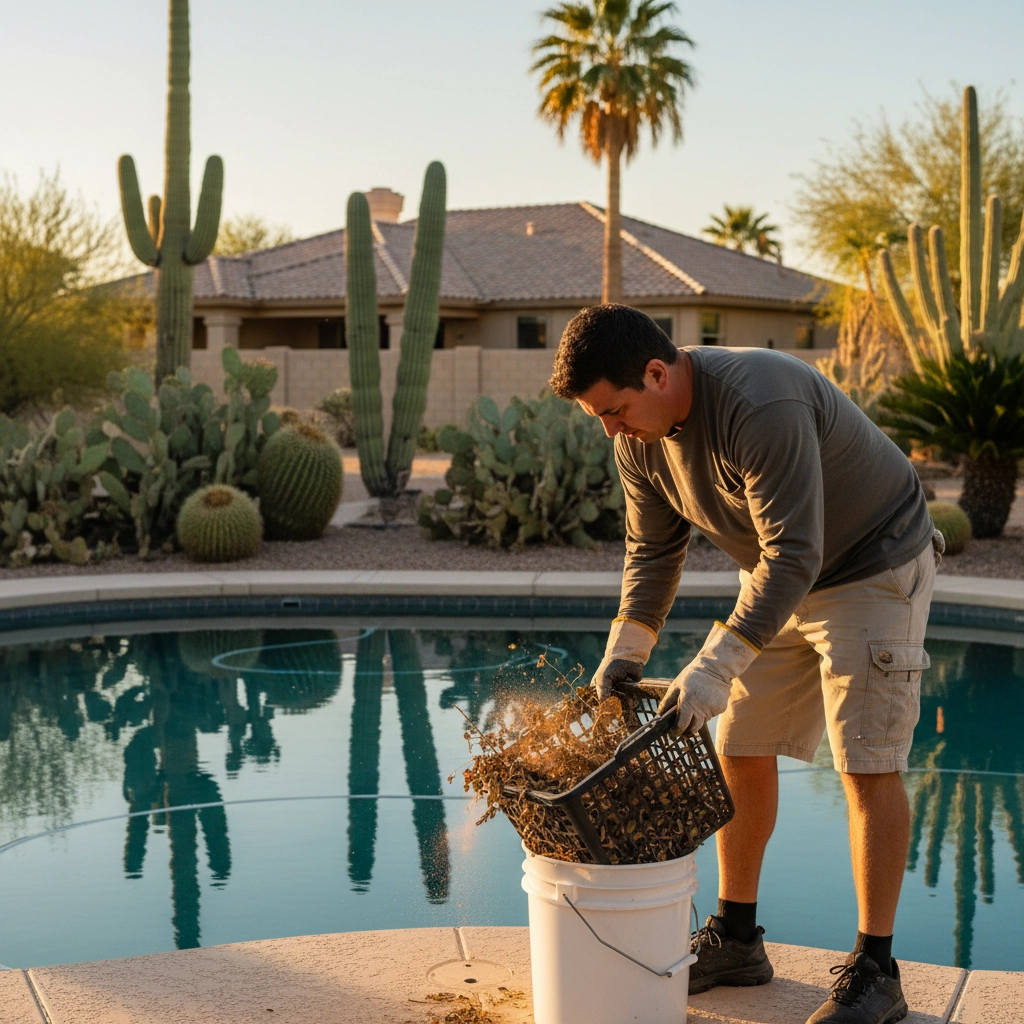
Don't forget the often-overlooked areas: skimmer baskets, pump baskets, and the area around your pool equipment. Clean these weekly throughout winter. Debris left in baskets creates a perfect breeding ground for bacteria and can cause expensive pump problems.
Finally, vacuum your pool completely. Use a manual vacuum or automatic cleaner to remove all settled debris. This deep clean sets the foundation for everything else you'll do to winterize your pool.
Step 2: Test and Balance Your Water Chemistry
Here's where many Arizona pool owners go wrong, they assume mild winter weather means they can ignore water chemistry. Big mistake. Even when your pool sits unused, unbalanced water can damage expensive equipment and create nightmare algae situations.
Test your water using quality test strips or a digital tester. You're looking for specific ranges:
- pH: 7.4-7.6
- Total Alkalinity: 80-120 ppm
- Chlorine: 2-4 ppm
The key difference in Arizona winter maintenance? Add a quality winter algaecide. Our warm winter days (sometimes hitting 70°F even in January) can trigger algae growth faster than you'd expect. Many pool owners in Mesa and Gilbert learn this lesson the hard way.
After adjusting chemicals, run your pump for at least 24 hours to circulate the treated water throughout your system. Think of this as mixing ingredients in a recipe, proper circulation ensures even distribution of chemicals.
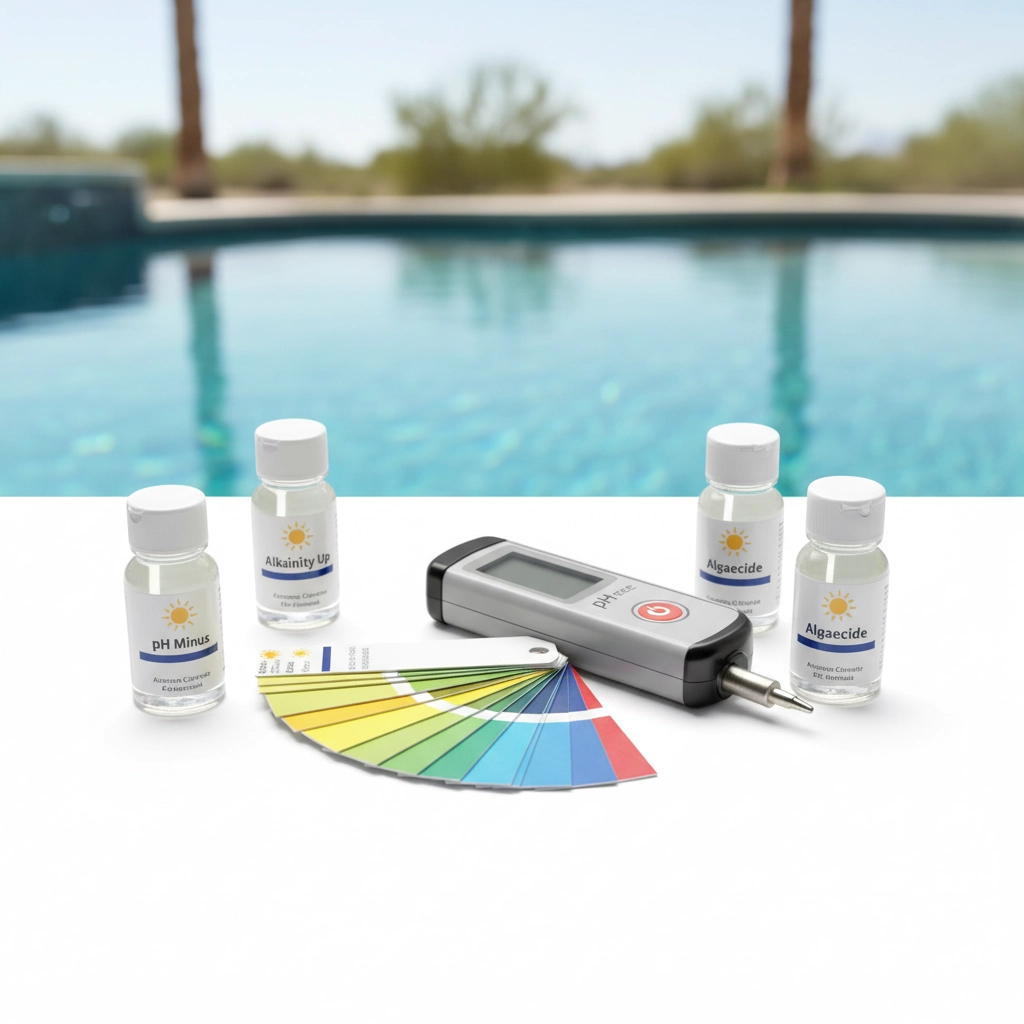
Continue testing weekly throughout winter. It takes just five minutes but prevents weeks of expensive algae treatment come spring.
Step 3: Adjust Equipment Settings for Off-Season Efficiency
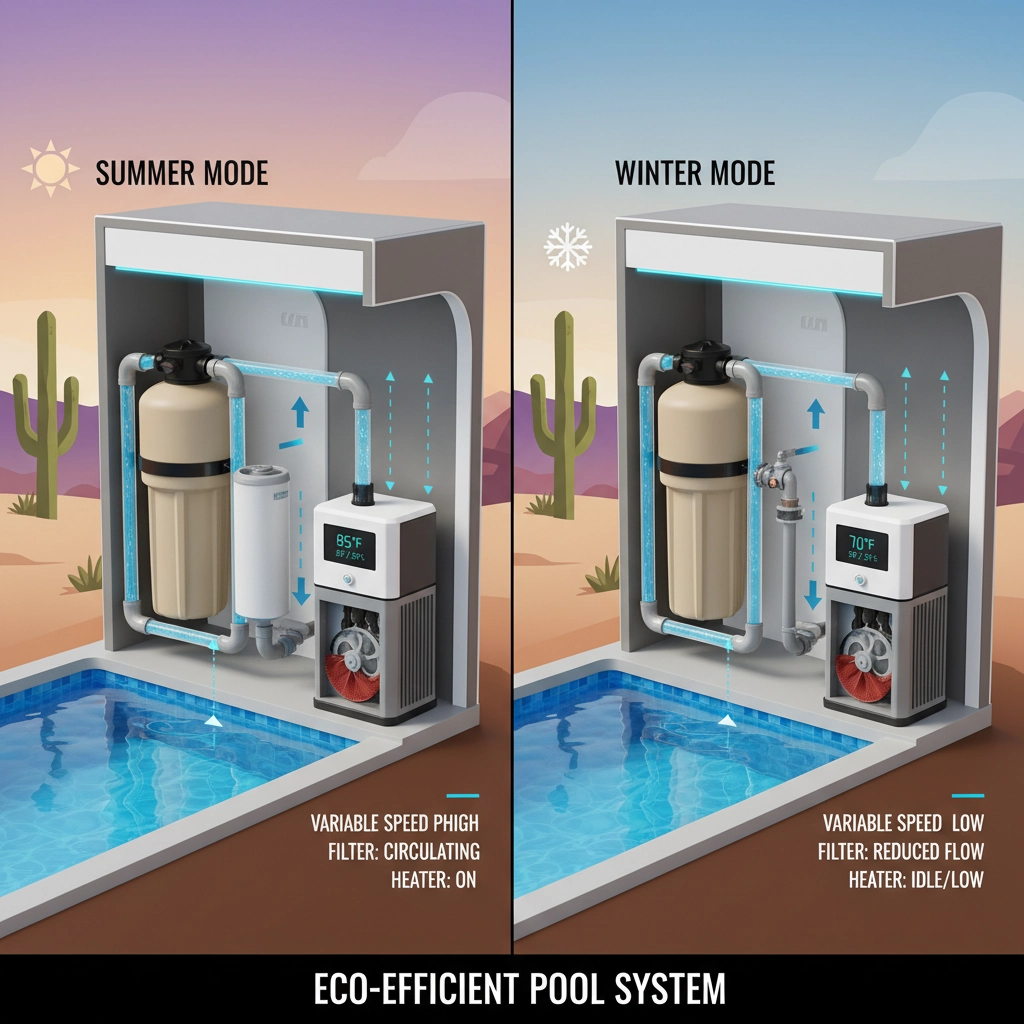
Your pool equipment doesn't need to work as hard during Arizona's mild winters, but it shouldn't shut down completely either. Smart adjustments here save money on utility bills while protecting your investment.
First, lower your water level about 6 inches below the skimmers using a siphon pump. This prevents overflow during winter storms, and yes, we do get them in the desert. Phoenix area pools can overflow during monsoon-like winter rains, potentially flooding your equipment area.
Next, reduce your pump runtime. Summer operations typically require 8-12 hours daily, but winter needs drop to just 4-6 hours. Program your pump to run during the coldest part of the day (usually early morning) to prevent any chance of pipe freezing during those rare cold snaps.
For homes in Queen Creek and San Tan Valley where temperatures occasionally dip near freezing, consider installing a freeze protection system. Modern pool automation can automatically start pumps when temperatures approach 32°F, preventing thousands in freeze damage.
If you have a saltwater system, clean your salt cell now and inspect all visible plumbing for cracks or leaks. Winter's temperature fluctuations can worsen existing problems.
Step 4: Disconnect and Store Non-Essential Equipment
Not everything needs to stay connected through winter. Strategic equipment storage protects expensive components while reducing maintenance needs.
Start by disconnecting your heater if you won't be swimming. Pool heaters contain sensitive components that benefit from winter rest. Store the unit according to manufacturer instructions: usually this means draining water lines and covering electrical connections.
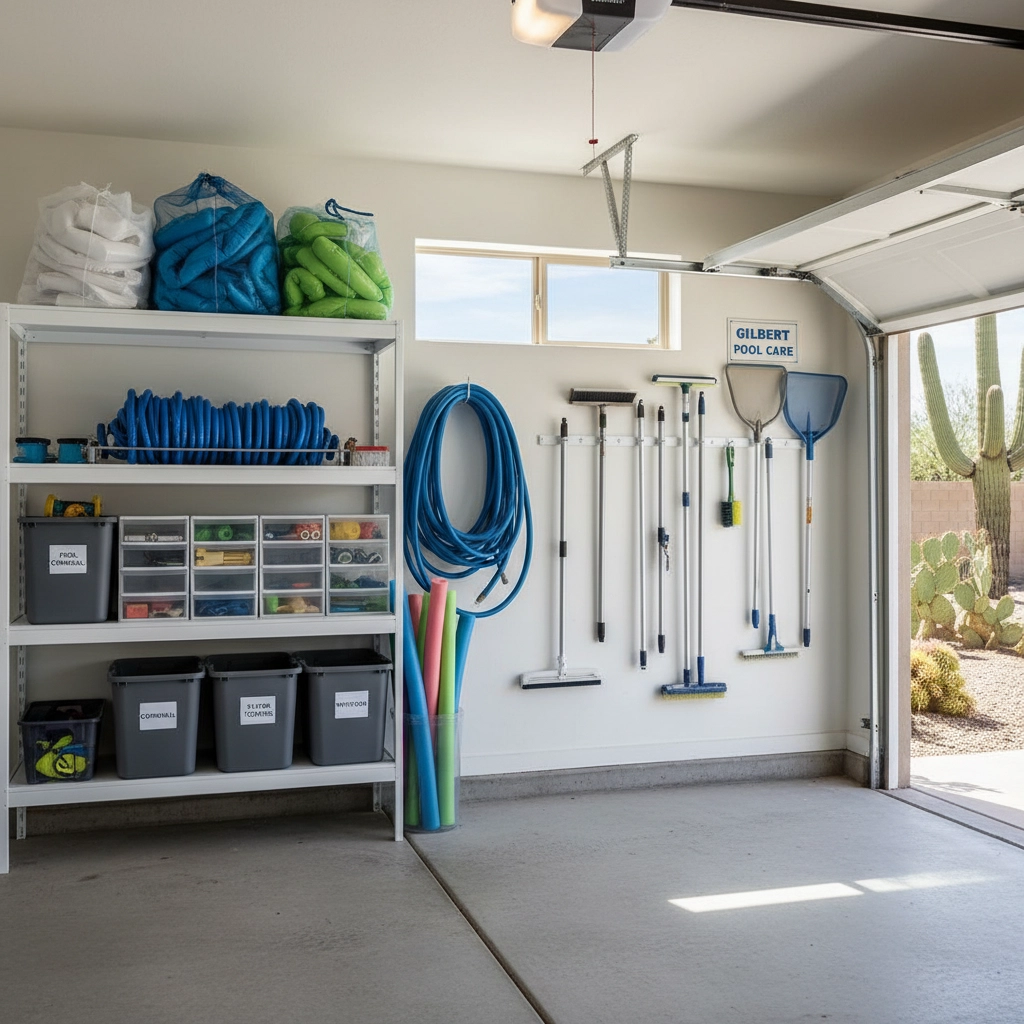
Remove and clean all hoses, floating cleaners, and removable accessories. Store these items in a garage or shed where temperature swings won't degrade rubber and plastic components.
For pools with water features like fountains or spillways, shut off water flow and drain these features. Standing water in decorative elements can become stagnant and create maintenance headaches.
Don't forget about your pool lighting. LED lights typically handle winter fine, but older incandescent systems may benefit from seasonal shutdown to extend bulb life.
Step 5: Install a Quality Winter Pool Cover
A good pool cover is your best friend during Arizona winters. While we don't need heavy-duty winter covers like northern climates, a quality safety or mesh cover provides multiple benefits.
First, it dramatically reduces debris accumulation. One windstorm can dump enough leaves and dust to keep you cleaning for hours. A cover prevents this completely.
Second, covers slow water evaporation: important in our dry desert climate. Arizona pools can lose significant water even in winter, and replacement water affects your carefully balanced chemistry.
Third, covers reduce chemical consumption. Less sunlight and debris means your chlorine lasts longer and algae growth slows dramatically.
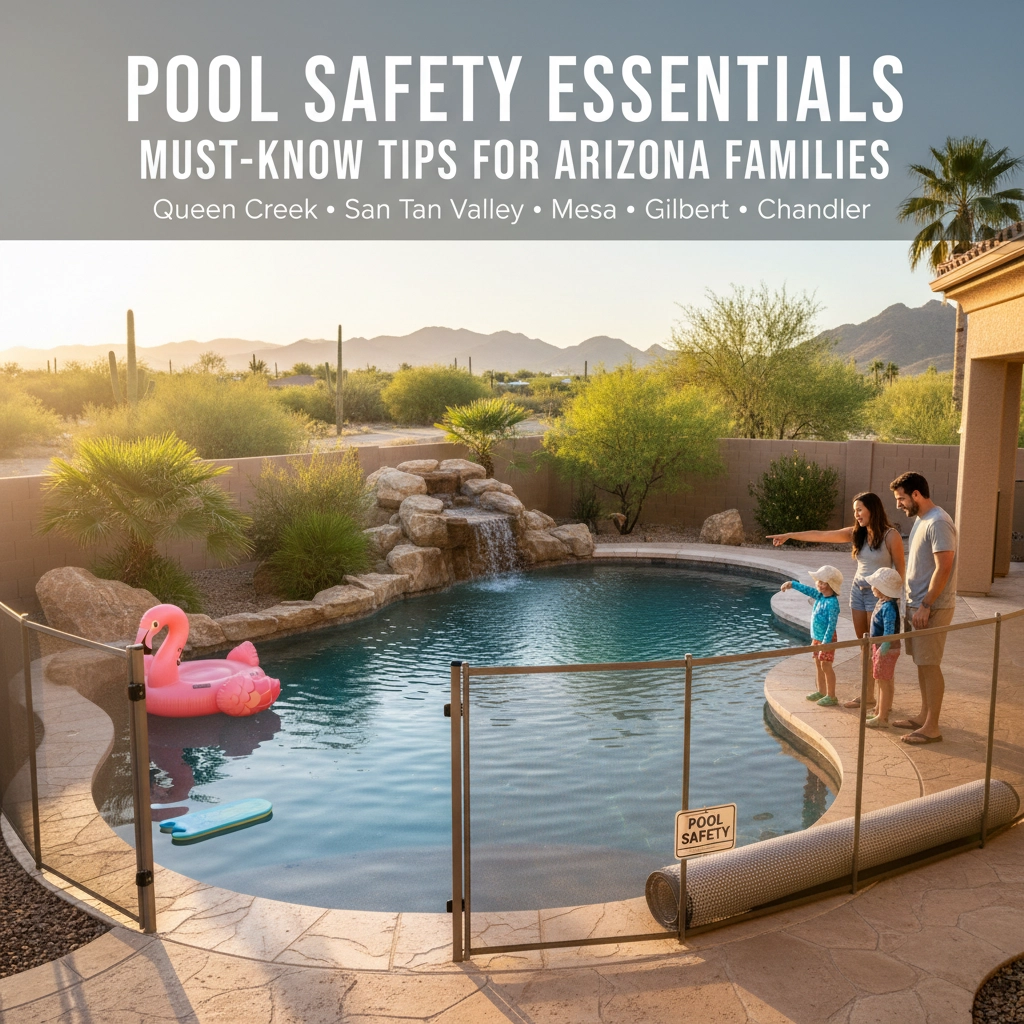
Choose a cover appropriate for your pool type. Safety covers work great for families with children or pets, while mesh covers excel at keeping debris out while allowing rainwater drainage.
Why This Matters for Desert Pool Owners
Arizona's unique climate creates specific challenges. Our mild winters can lull pool owners into complacency, but neglect leads to expensive spring surprises. Algae blooms, stained surfaces, and equipment failures cost thousands to repair.
Pool service companies in Chandler and Gilbert see the same problems every spring: pools owned by DIYers who thought winter maintenance was optional. Green water, clogged filters, and damaged equipment could have been prevented with proper off-season care.
Common Arizona Winter Pool Mistakes to Avoid
Don't completely drain your pool. Desert soil shifts, and empty pools can literally pop out of the ground due to groundwater pressure. Keep water levels just below skimmers, not empty.
Don't ignore equipment completely. Pumps and filters need periodic operation even in winter. Stagnant systems develop problems quickly in our dusty environment.
Don't assume mild weather means no maintenance. Arizona's temperature swings: sometimes 40°F differences between day and night: stress pool systems in unique ways.
Professional Help When You Need It
While these 5 steps handle most winter maintenance, some situations require professional attention. Underground leak detection, equipment repairs, and major chemical imbalances are best handled by experienced technicians.
If you're dealing with persistent algae, unusual staining, or equipment malfunctions, professional pool services can save time and money. Sometimes the cost of professional help is less than the cost of DIY mistakes.
Following these 5 steps protects your pool investment and ensures crystal-clear water when swimming season returns. Arizona's desert climate is forgiving, but proper winter maintenance makes the difference between enjoying your pool and fighting expensive problems all season long.
Remember, a little attention now prevents major headaches later. Your future self: and your wallet: will thank you when spring arrives and your pool is ready for immediate enjoyment instead of weeks of costly repairs.