How to Use Digital Water Testing for Perfect Pool Chemistry in the Arizona Desert (2025 Guide)
Arizona's desert environment creates unique challenges for pool owners in Queen Creek, Mesa, Gilbert, Chandler, and San Tan Valley. Between scorching temperatures, hard water, and constant dust storms, maintaining perfect pool chemistry feels like an uphill battle. That's where digital water testing becomes your secret weapon.
If you've ever wondered why your pool levels seem constantly off despite regular testing, you're not alone. The truth is, traditional test strips often fail in Arizona's extreme conditions, giving inaccurate readings that lead to frustrating chemical imbalances.
Why Traditional Testing Methods Fall Short in Arizona
Arizona's desert climate wreaks havoc on standard pool testing methods. Test strips lose accuracy in extreme heat, often giving false readings when temperatures soar above 100°F. The intense UV radiation degrades the chemical reagents on strips, making them unreliable just when you need accurate readings most.
Hard water compounds the problem. Arizona's groundwater contains high levels of calcium and magnesium, which interfere with traditional testing methods. What appears as a normal chlorine reading on a strip might actually indicate severe imbalance when mineral content is factored in.
Temperature swings between day and night also affect chemical behavior in ways that basic testing can't detect. A pool that tests fine at 7 AM might have completely different chemistry by 3 PM when the Arizona sun has baked it all day.
The Digital Testing Advantage for Desert Pools
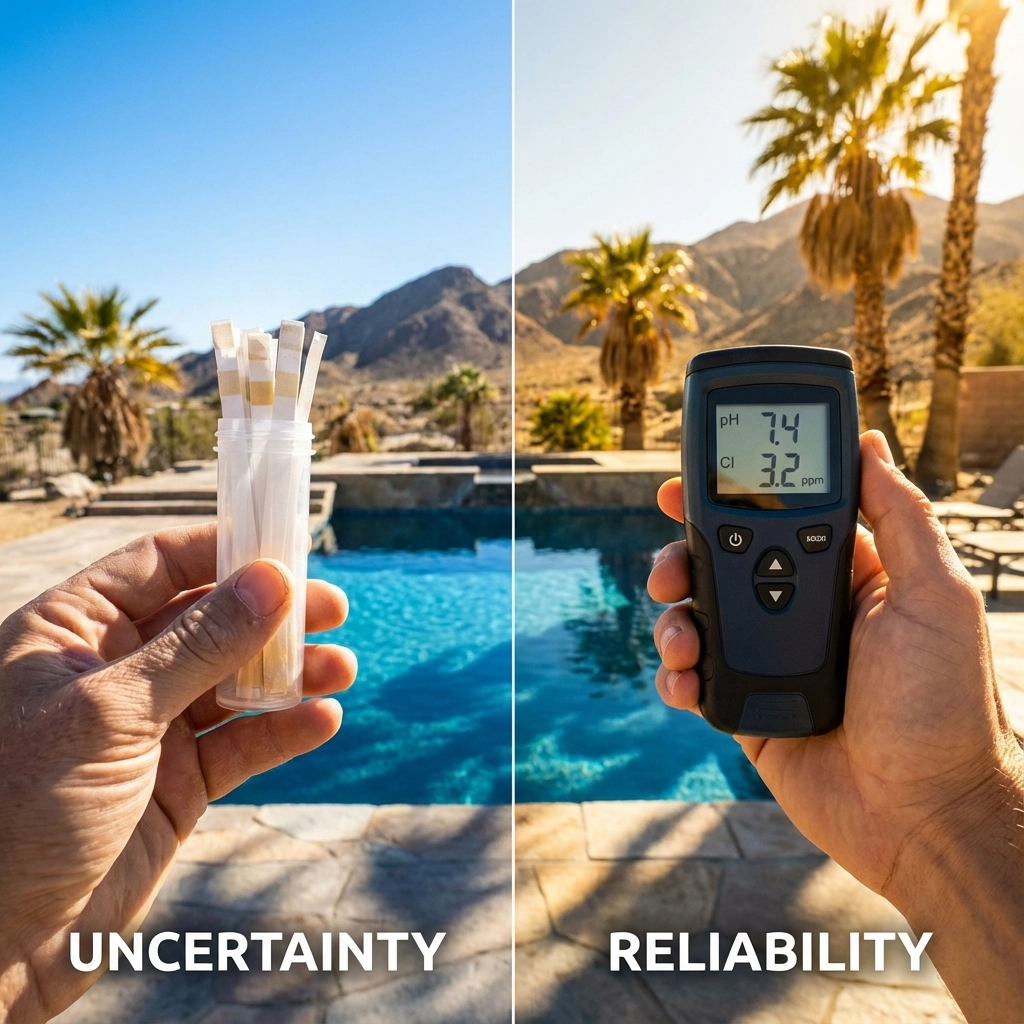
Digital water testing eliminates guesswork by providing precise, temperature-compensated readings regardless of environmental conditions. Unlike test strips that rely on color comparisons (which become nearly impossible under Arizona's harsh sun), digital testers give exact numerical values.
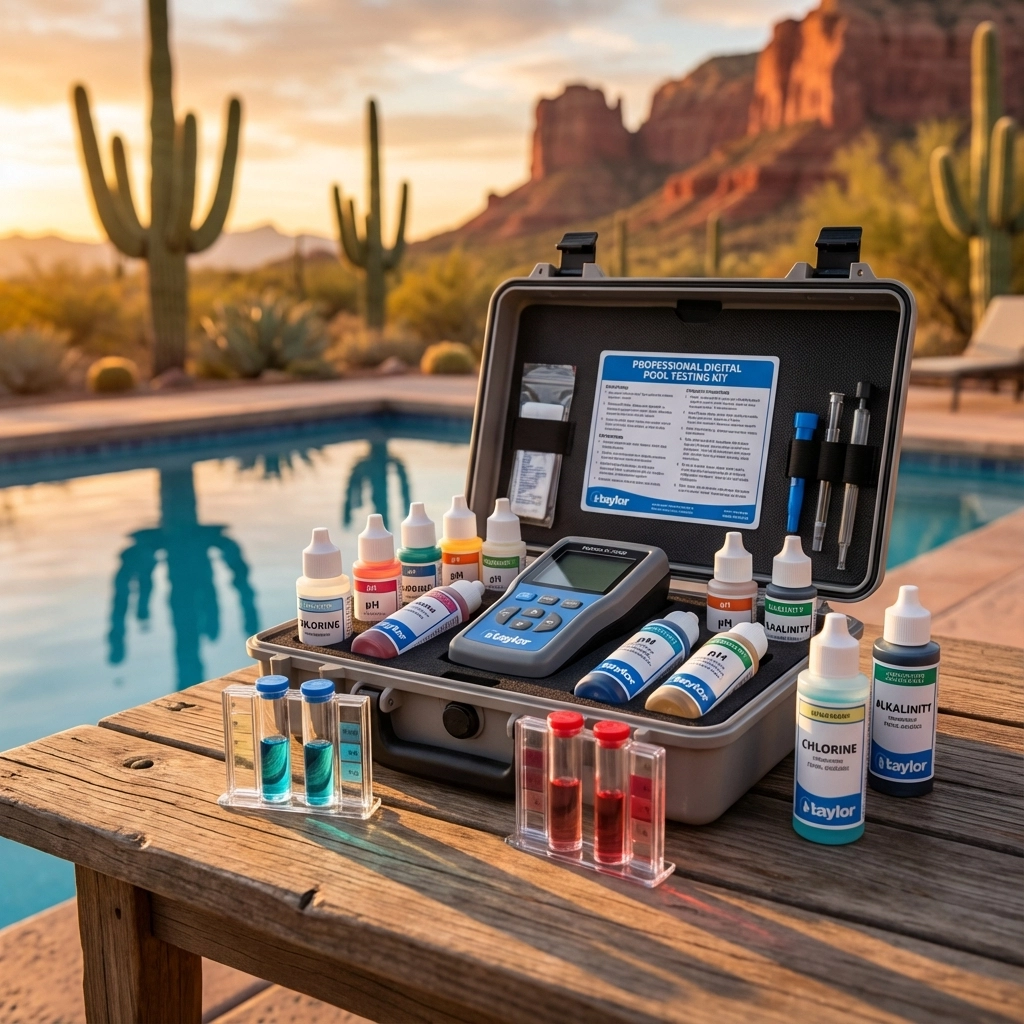
The Taylor K-2006 FAS-DPD Test Kit, considered the gold standard by pool professionals, uses digital colorimeter technology that accounts for temperature variations and mineral interference. This precision becomes crucial when dealing with Arizona's challenging water conditions.
Digital testing also measures parameters that strips simply can't detect accurately, including:
- Total dissolved solids (TDS)
- Oxidation-reduction potential (ORP)
- Temperature-compensated pH
- Free vs. total chlorine differentiation
- Chlorine effectiveness decreases in hard water
- pH becomes more difficult to control
- Scale formation occurs more rapidly
- Chemical reactions happen at different rates
- Bather load and sunscreen introduction
- UV chlorine consumption
- Temperature-driven evaporation
- Wind-blown debris
- Temperature-compensated readings
- Accurate in high-mineral content water
- Precise free vs. combined chlorine detection
- Long reagent shelf life despite heat storage
- Pool circulation system efficiency
- Filter condition and flow rate
- Chemical feeder calibration
- Possible underground water intrusion
- Combined chlorine buildup requiring shock treatment
- High cyanuric acid levels blocking chlorine effectiveness
- Algae spore presence not visible to naked eye
- Reduced chemical waste from accurate dosing
- Prevention of costly algae treatment cycles
- Extended equipment life from proper chemistry
- Avoided resurfacing from chemical damage
Common Arizona Pool Owner Questions Answered
"Why Are My Pool Levels Always Off?"
Arizona's extreme evaporation rates concentrate chemicals and minerals rapidly. What starts as balanced water in the morning can become over-concentrated by evening. Digital testing reveals these subtle changes before they become major problems.
High winds carrying dust and debris also consume chlorine faster than in other climates. Traditional strips often miss these rapid chlorine drops, leading to algae blooms that seem to appear overnight.
"How Often Should I Test in Arizona?"
Desert pools require more frequent testing than pools in moderate climates. During summer months (May through September), test at least three times per week using digital methods. During peak heat (July-August), daily testing prevents costly chemical disasters.
Winter testing can be reduced to twice weekly, but don't skip it entirely. Arizona's mild winters still present challenges like dust storms and occasional freeze warnings that affect chemistry.
"Do I Need Digital Testing or Are Strips Fine?"
For Arizona pools, digital testing isn't luxury: it's necessity. Strips work adequately in mild climates, but desert conditions expose their limitations. Consider this: replacing your pool surface due to chemical damage costs thousands more than investing in quality digital testing equipment.
Understanding Arizona's Water Chemistry Challenges
Hard Water Impact
Most Arizona municipalities source water with 200-400 ppm calcium hardness, significantly higher than national averages. This affects every aspect of pool chemistry:
Digital testing reveals true chemical availability, not just total amounts. For example, you might show adequate chlorine levels on strips while actual available chlorine remains insufficient due to calcium interference.
Temperature Effects on Chemistry
Arizona pools often reach 95-100°F during summer months. These elevated temperatures accelerate chemical reactions and evaporation in ways that standard testing can't accurately measure.
Digital testers automatically compensate for temperature, providing readings adjusted for actual pool conditions. This prevents over-dosing chemicals based on inaccurate cool-weather calculations.
Dust and Debris Consumption
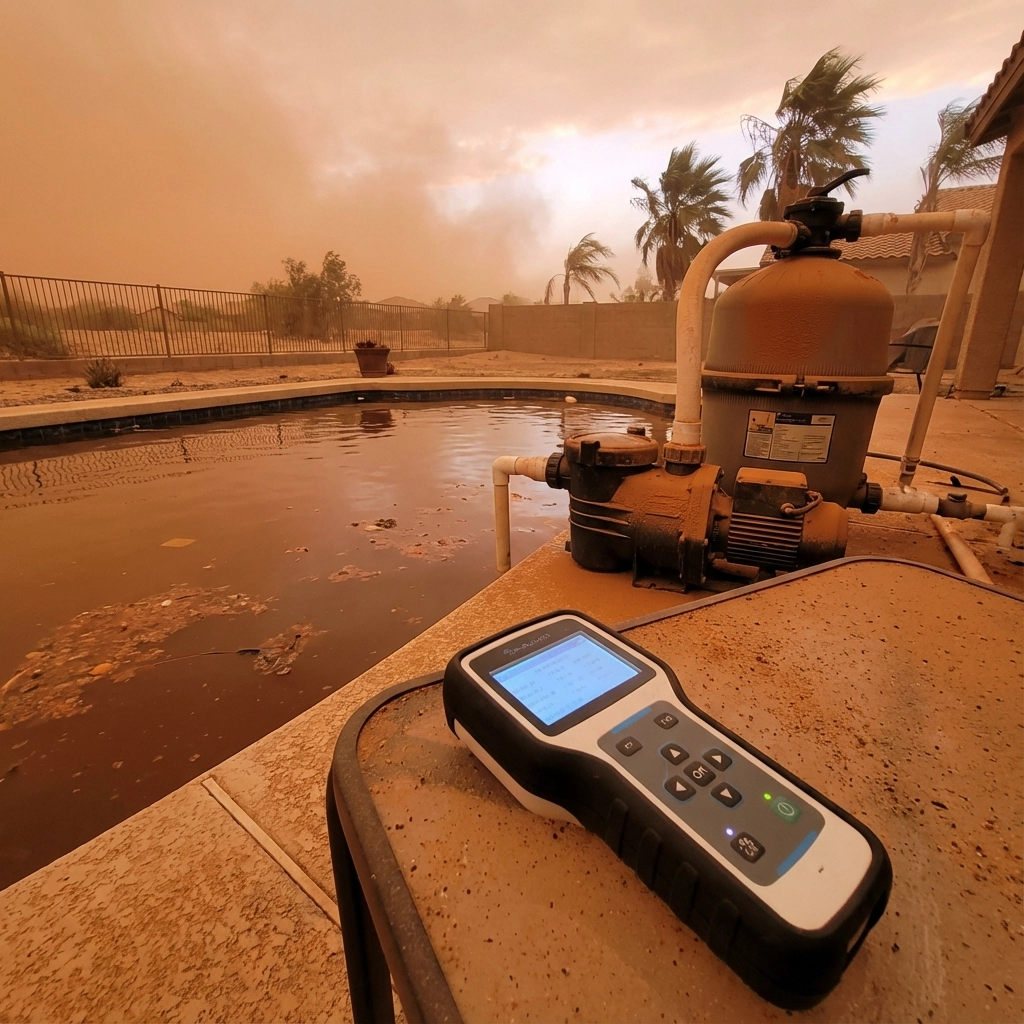
Haboobs (dust storms) common in the Phoenix metro area introduce massive amounts of organic matter into pools overnight. This organic load consumes chlorine rapidly, often depleting levels below detectable ranges on test strips.
Digital testing with precise chlorine measurement helps you respond quickly to these events, preventing the algae blooms that frequently follow dust storms.
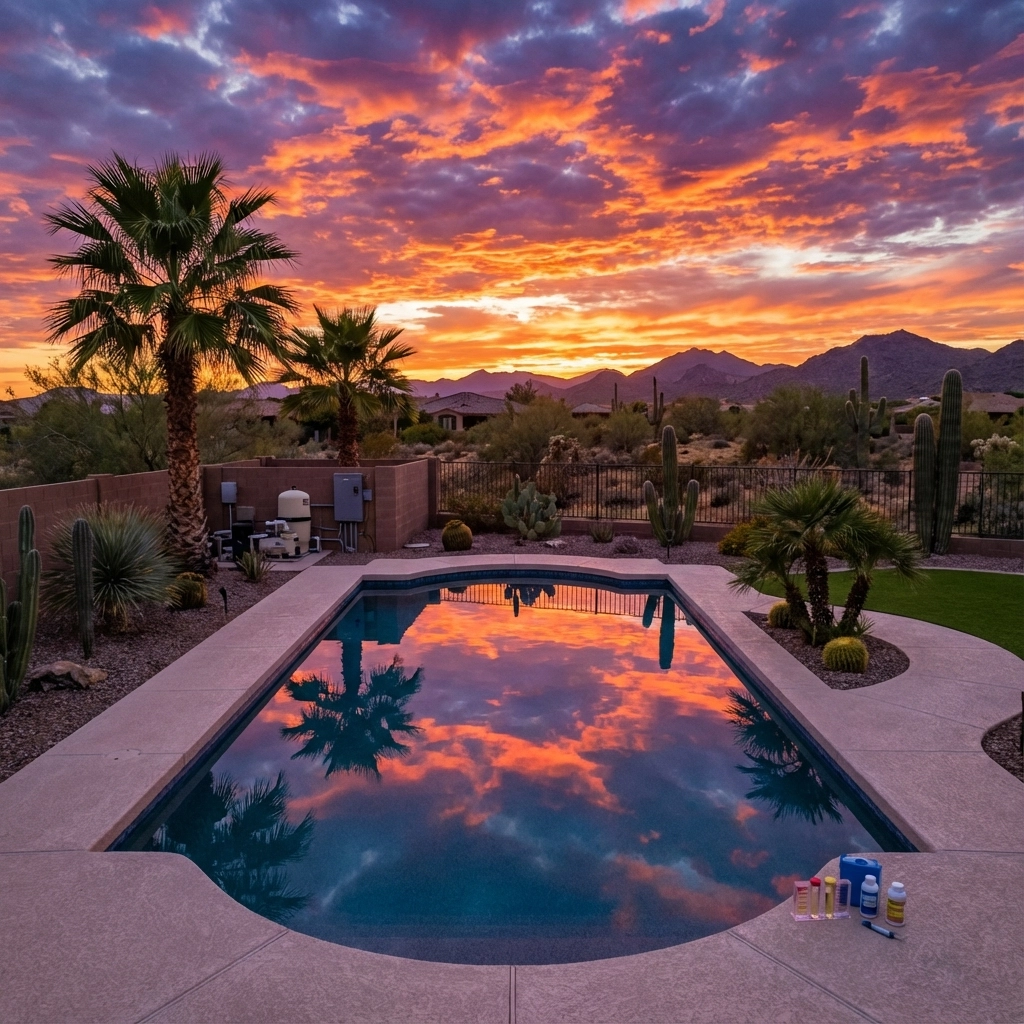
Step-by-Step Digital Testing Protocol for Arizona Pools
Morning Testing Routine (Best Time: 6-8 AM)
1. Collect Sample: Use clean sample container, taking water from elbow-deep, away from returns and skimmers 2. Temperature Check: Allow digital tester to calibrate to sample temperature 3. pH Testing: Test pH first, as it affects all other readings 4. Chlorine Analysis: Test free chlorine, then total chlorine if available 5. Additional Parameters: Test alkalinity, calcium hardness weekly
Evening Verification (During Peak Season)
Arizona pools benefit from evening verification during hottest months. Chemistry can shift dramatically between morning and afternoon due to:
Quick evening digital pH and chlorine checks prevent overnight problems.
Recommended Digital Testing Equipment for Arizona
Taylor K-2006 FAS-DPD Complete Test Kit
The Taylor K-2006 remains the professional standard for accurate pool chemistry testing. Its FAS-DPD chlorine testing provides unmatched accuracy in high-TDS Arizona water conditions.
Key benefits for desert pools:
Digital pH/Chlorine Combo Meters
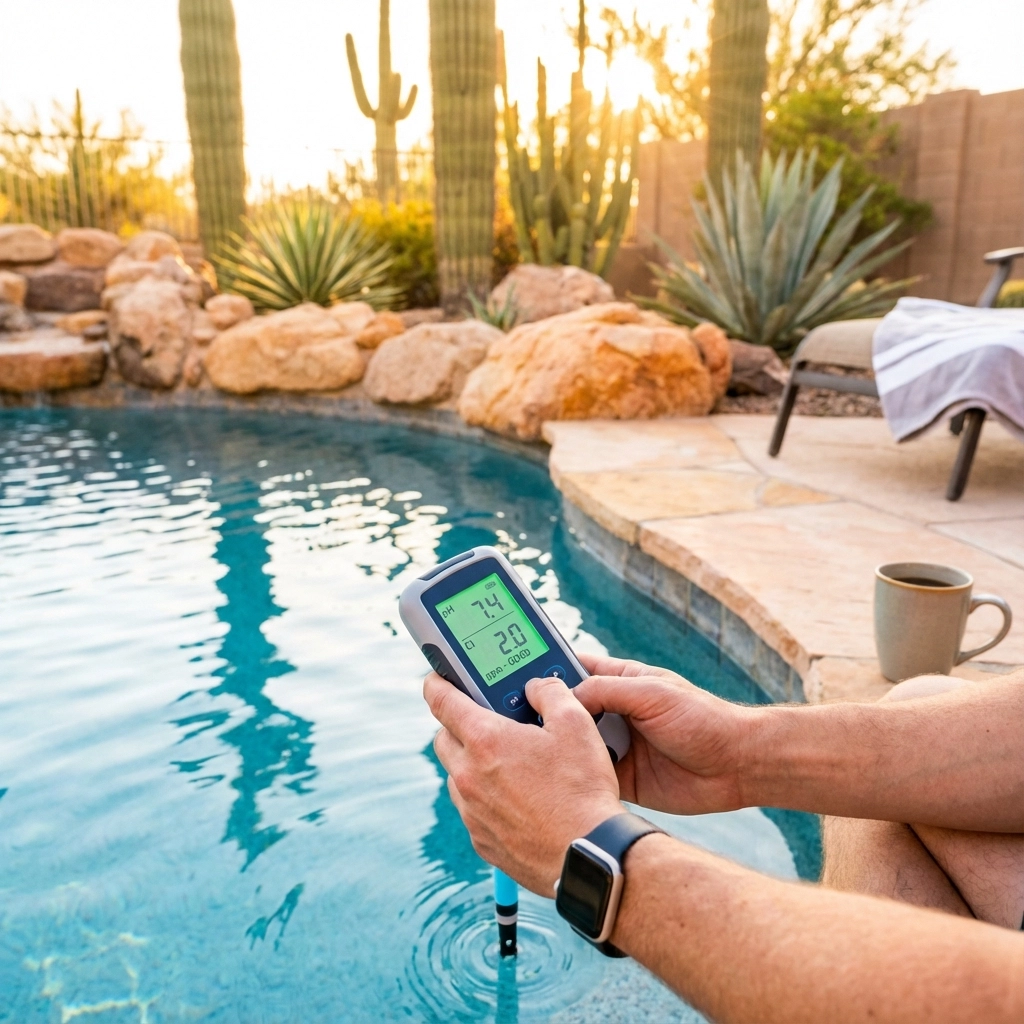
For daily testing convenience, digital pH/chlorine meters provide quick, accurate readings without reagent mixing. Look for models with automatic temperature compensation and calibration reminders.
Troubleshooting Common Arizona Testing Issues
Inaccurate Readings Despite New Equipment
Hard water can interfere with even digital testing if not properly calibrated. Recalibrate equipment monthly using Arizona-specific calibration solutions that account for high mineral content.
Rapid Chemistry Changes
If digital testing shows dramatic swings between readings, investigate:
Persistent Chlorine Demand
Arizona pools often show continuous chlorine consumption despite adequate levels. Digital testing helps identify:
Integrating Digital Testing with Pool Maintenance
Weekly Testing Schedule
Monday/Wednesday/Friday: Full digital panel (pH, chlorine, alkalinity) Tuesday/Thursday: Quick digital pH and chlorine check Saturday: Complete analysis including calcium hardness, cyanuric acid Sunday: Equipment inspection and testing calibration check
Seasonal Adjustments
Summer (May-September): Daily digital chlorine testing, tri-weekly complete panels Winter (October-April): Reduce to every-other-day testing, weekly complete analysis Monsoon Season (July-September): Increase testing frequency before and after storms
Cost Analysis: Digital Testing vs. Strip Testing
While initial digital testing equipment investment ranges from $50-200, annual savings quickly justify the expense:
Arizona pool owners typically save $300-500 annually through precise digital testing, not counting avoided major repairs.
Professional vs. DIY Digital Testing
Complete Aquatic Solutions recommends DIY digital testing for routine maintenance, with professional verification quarterly. Our DIY resources provide comprehensive training for accurate home testing.
For complex chemistry issues or persistent problems, professional digital analysis includes advanced testing not available in home kits, such as phosphate levels and water balance calculations specific to Arizona conditions.
Digital water testing transforms pool ownership in Arizona's challenging desert environment. By providing accurate, temperature-compensated readings regardless of extreme conditions, digital testing prevents the costly chemistry disasters common with traditional methods. Whether you choose the professional-grade Taylor K-2006 or convenient digital meters, accurate testing remains your first line of defense against Arizona's harsh pool environment.