7 Mistakes You're Making with Well Water Pool Problems (And How to Fix Them)
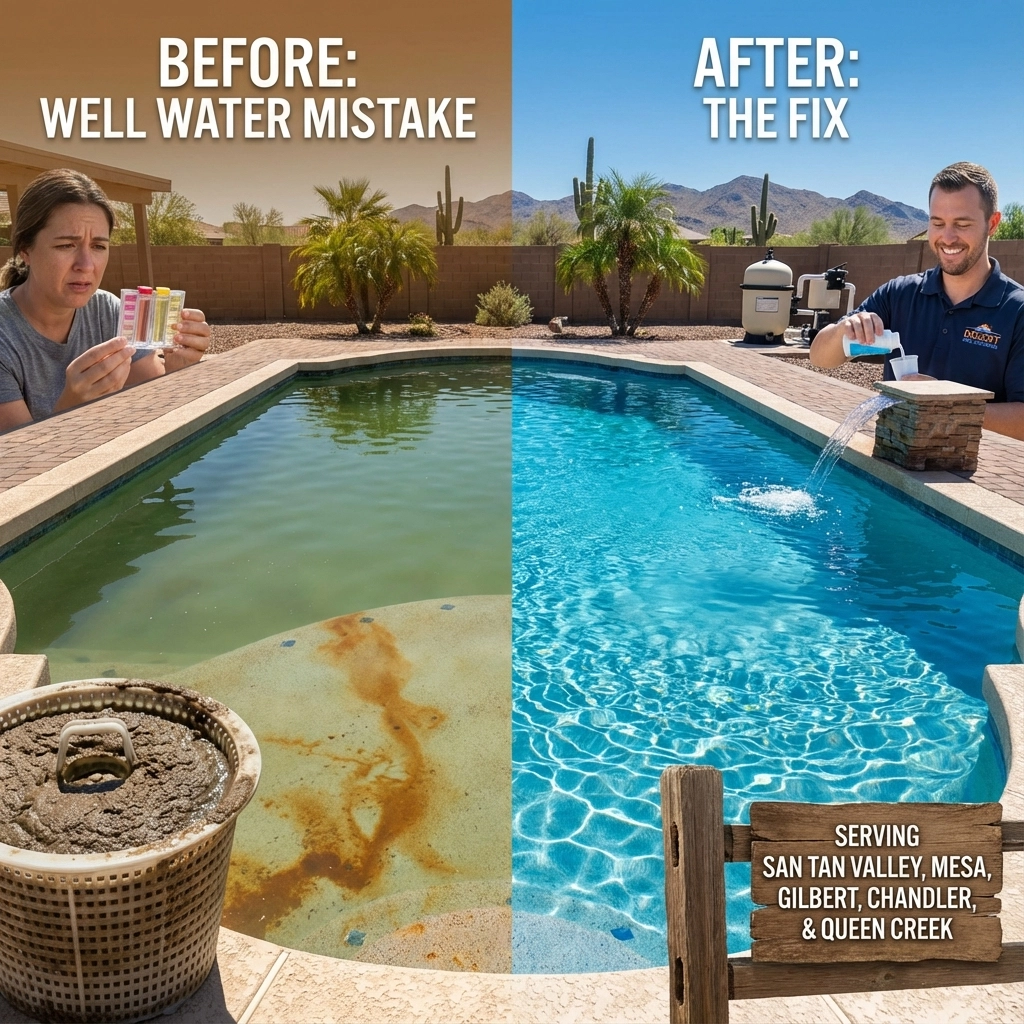
If you're a homeowner in Queen Creek, Mesa, Gilbert, Chandler, or San Tan Valley dealing with a well water pool, you've probably noticed some unique challenges that your neighbors with city water don't face. That rusty stain around your pool steps, the sulfur smell that hits you on hot Arizona afternoons, or the way your crystal-clear water turns an ugly brown-green color after you shock it, these aren't just random pool problems. They're telltale signs of well water issues that many Arizona pool owners handle incorrectly.
Well water pools require a completely different approach than city water pools. The minerals, heavy metals, and unique chemistry of Arizona's groundwater can turn routine pool maintenance into a frustrating cycle of problems if you don't know what you're doing. Let's break down the seven biggest mistakes homeowners make with well water pools and give you the knowledge to fix them once and for all.
Mistake #1: Not Testing Your Source Water Before Adding It to Your Pool
The Problem: Most pool owners treat all water the same. You turn on the hose, fill your pool, and start balancing chemicals. But well water in Arizona can contain high levels of iron, manganese, sulfur, calcium, and other minerals that will immediately create problems in your pool.
Why It Matters: Testing your source water is like getting a roadmap before a trip. Without knowing what minerals you're dealing with, you're essentially driving blindfolded. Iron levels as low as 0.3 parts per million can cause staining. Sulfur can create that rotten egg smell that makes your backyard unbearable during Arizona's hot summer months.
The Fix: Before adding any well water to your pool, take a sample to a local pool store or use a comprehensive well water test kit. Test specifically for iron, manganese, sulfur, calcium hardness, total dissolved solids, and pH. In the East Valley, many wells contain particularly high iron content due to the geological composition of the area.
Once you know what you're dealing with, you can implement the right pretreatment strategy. This one step will save you hundreds of dollars in chemicals and prevent most of the staining and discoloration issues that plague well water pools.
Mistake #2: Adding Chlorine Before Treating Minerals
The Problem: Here's where most people go wrong: they fill their pool with well water and immediately start shocking it or adding chlorine to get it "pool ready." This is like painting over rust, you're just making the problem worse.
The Science: When chlorine or oxidizers contact iron and other metals in well water, they cause immediate oxidation. That iron turns from clear, dissolved metal into visible rust particles that stain everything they touch. Your pool bottom develops those telltale rust-colored stains, and no amount of scrubbing will remove them easily.
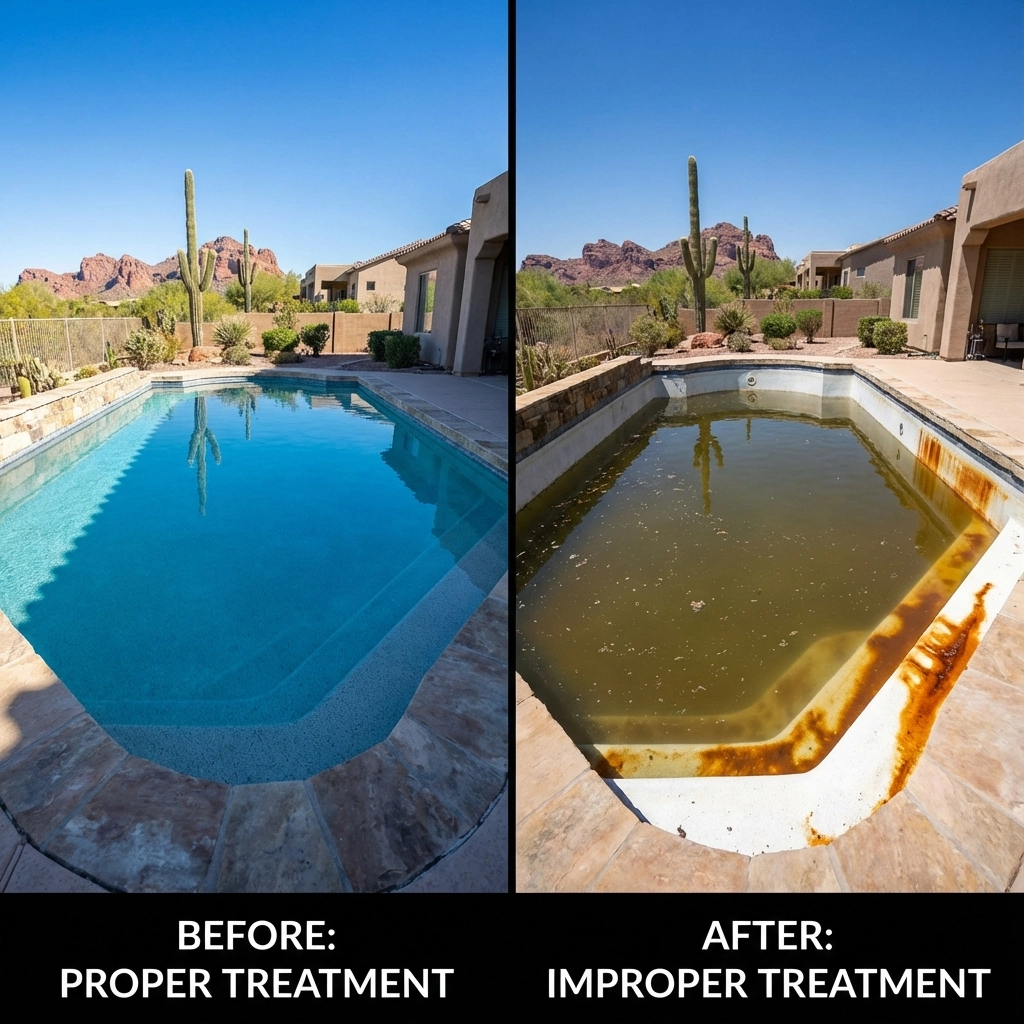
The Fix: Always treat minerals before adding any oxidizers. Use a metal sequestrant or chelating agent specifically designed for well water pools. Add this product and let it circulate for at least 24 hours before introducing chlorine. Think of it as creating a protective bubble around each metal particle, preventing oxidation and staining.
For Arizona well water, look for products that specifically target iron and manganese. Many pool stores in Queen Creek and Mesa carry specialized well water treatments that work better than generic metal control products.
Mistake #3: Ignoring Total Water Balance
The Problem: Many pool owners focus only on chlorine levels and ignore the relationship between pH, alkalinity, and calcium hardness. With well water, this balancing act becomes even more critical because the high mineral content affects how all your other chemicals work.
Why It's Critical: When your pH swings wildly, which well water tends to cause, your chlorine becomes ineffective. Alkalinity acts as a buffer, but well water's natural chemistry can overwhelm your alkalinity, causing pH to bounce around like a pinball. High calcium levels can cause scaling, while low levels can make your water corrosive.
The Fix: Test and balance in this exact order: 1. Total alkalinity (aim for 80-120 ppm) 2. pH (7.2-7.6) 3. Calcium hardness (200-400 ppm for concrete pools, 150-300 for vinyl) 4. Then, and only then, address chlorine levels
In Arizona's hard water areas like Gilbert and Chandler, you'll often find naturally high calcium levels. Don't try to lower them dramatically, work with what you have and focus on preventing scaling through proper pH control.
Mistake #4: Using Inadequate Filtration for Heavy Metals
The Problem: Standard sand or cartridge filters can't remove dissolved metals from well water. These metals stay in solution until something (like chlorine) causes them to precipitate out as stains and sediment.
The Reality: Your regular pool filter is designed to catch physical debris, leaves, dirt, dead algae. It can't catch dissolved iron any more than a coffee filter can catch sugar dissolved in water. You need specialized filtration to deal with well water's unique challenges.
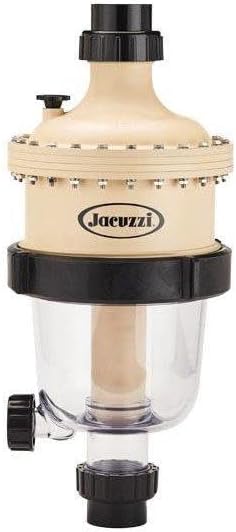
The Fix: Install a metal removal system before your main filter. Options include:
- Metal trap filters: These use special media to physically remove dissolved metals as water circulates
- Dual-cartridge systems: Combine metal removal with sediment filtration
- Centrifugal pre-filters: Remove sediment and reduce the load on your main filter
- Heat exchanger coils (if you have a pool heater)
- Filter cartridges or sand media
- Pump impellers and housings
- Automatic chemical feeders
For San Tan Valley and Queen Creek homes with high iron content, a metal trap filter can be a game-changer. It's an upfront investment that prevents ongoing problems and reduces chemical usage.
Mistake #5: Running Your Filter System for Insufficient Time
The Problem: Many homeowners run their pool pumps for only 4-6 hours per day to save on electricity costs. With well water pools, this isn't nearly enough time to deal with the constant mineral influx and maintain water quality.
The Math: Arizona's intense UV rays and heat accelerate chemical reactions in your pool. Combined with well water's mineral content, you need more circulation time to prevent problems. Insufficient filtration time allows metals to concentrate and precipitate, creating the staining and discoloration that's so common in well water pools.
The Fix: Run your system at least 8-12 hours daily, especially during summer months. Consider running it during off-peak electricity hours to manage costs. The money you save on chemicals and stain removal will more than offset the additional electricity costs.
If you're adding fresh well water regularly due to evaporation (common in Arizona's dry climate), increase your run time proportionally. More new well water means more minerals that need processing.
Mistake #6: Skipping Preventive Maintenance and Descaling
The Problem: Well water's high mineral content causes faster buildup of scale and deposits throughout your pool system. Many homeowners ignore this buildup until it causes equipment failure or severely reduced performance.
The Hidden Costs: Scale buildup reduces your filter's effectiveness, making your pump work harder and reducing its lifespan. It also provides hiding places for bacteria and algae, making your sanitizer less effective. In Arizona's hard water areas, this problem accelerates quickly.
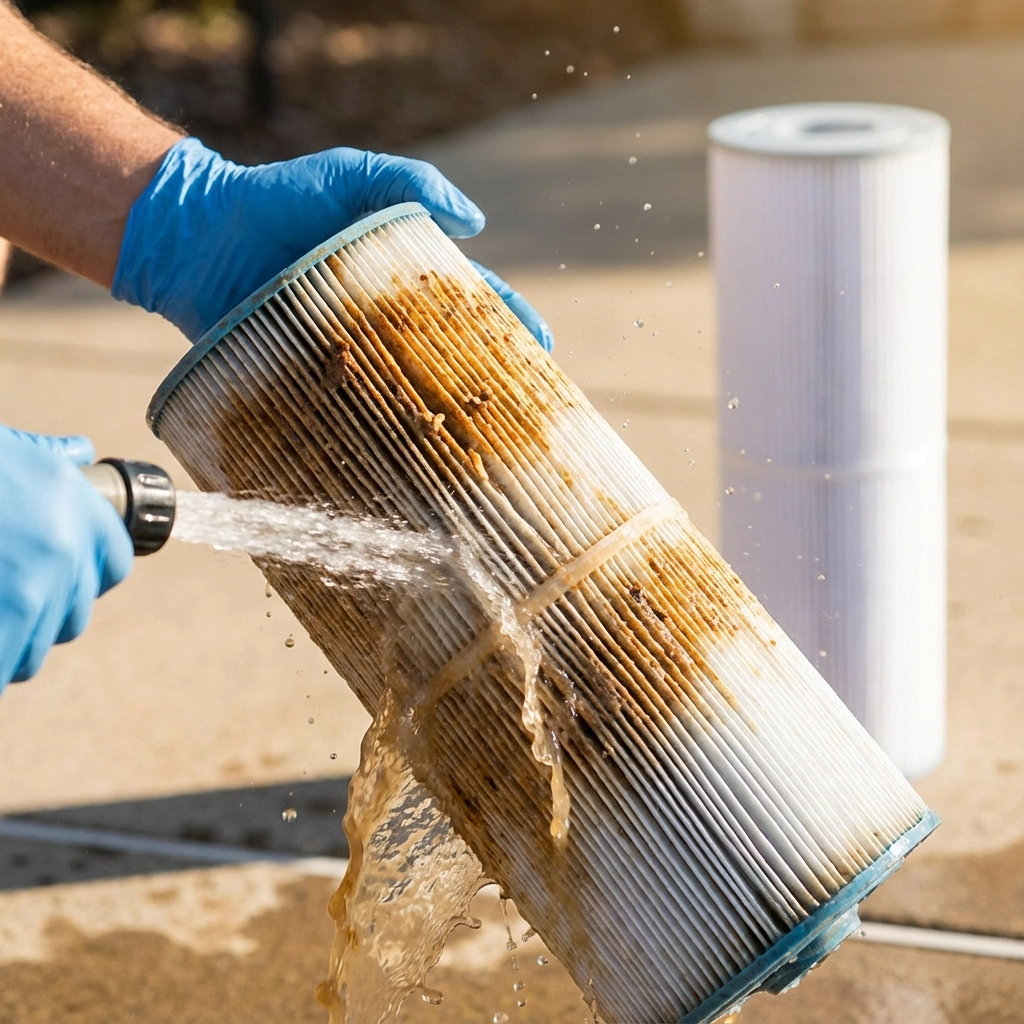
The Fix: Implement a quarterly descaling routine for all your pool equipment. Use specialized descaling products designed for pool equipment, not household cleaners. Pay special attention to:
Annual professional cleaning of your entire circulation system can prevent major problems and extend equipment life significantly.
Mistake #7: Relying Only on Automatic Systems Without Manual Shock Treatments
The Problem: Many well water pool owners install automatic chlorination systems and assume their pool will maintain itself. While automation helps, well water pools need periodic shock treatments to deal with metal-chlorine interactions and biofilm buildup.
Why Automation Isn't Enough: Continuous low-level chlorination can cause metals to slowly precipitate and build up in hidden areas of your pool system. Bacteria can also develop resistance to constant low-level sanitizer exposure, especially in the presence of minerals that can interfere with chlorine's effectiveness.
The Fix: Even with automatic systems, perform manual shock treatments 1-2 times per season using these steps: 1. Pre-treat with metal sequestrant 2. Wait 24 hours 3. Perform shock treatment in the evening 4. Run filter system continuously for 24-48 hours 5. Clean filter media thoroughly after treatment
This "reset" process helps clear accumulated metals and eliminates resistant bacteria that have adapted to your automatic system's constant chlorine levels.
Key Takeaway for Arizona Well Water Pool Owners
Managing a well water pool in Arizona's desert climate requires a proactive approach that addresses the unique chemistry of groundwater. The key principle is timing: test first, treat minerals before oxidation, maintain proper balance, and stay ahead of problems rather than reacting to them.
Whether you're in Queen Creek dealing with high iron content, or in Mesa managing calcium scaling, understanding your specific water chemistry is the foundation of successful pool maintenance. With the right knowledge and approach, your well water pool can be just as beautiful and enjoyable as any city water pool: maybe even more so, since you'll have complete control over what goes into your water.
Remember, every well is different, even within the same neighborhood. What works for your neighbor might not work for you. Start with comprehensive water testing, implement the right treatment sequence, and maintain consistent care routines. Your pool: and your wallet: will thank you.
For more detailed guidance on DIY pool maintenance and equipment selection, visit our comprehensive guides section where you'll find step-by-step instructions tailored for Arizona pool owners.